2016 FORD ESCAPE SE VIN 1FMCU9GX0GUB74772
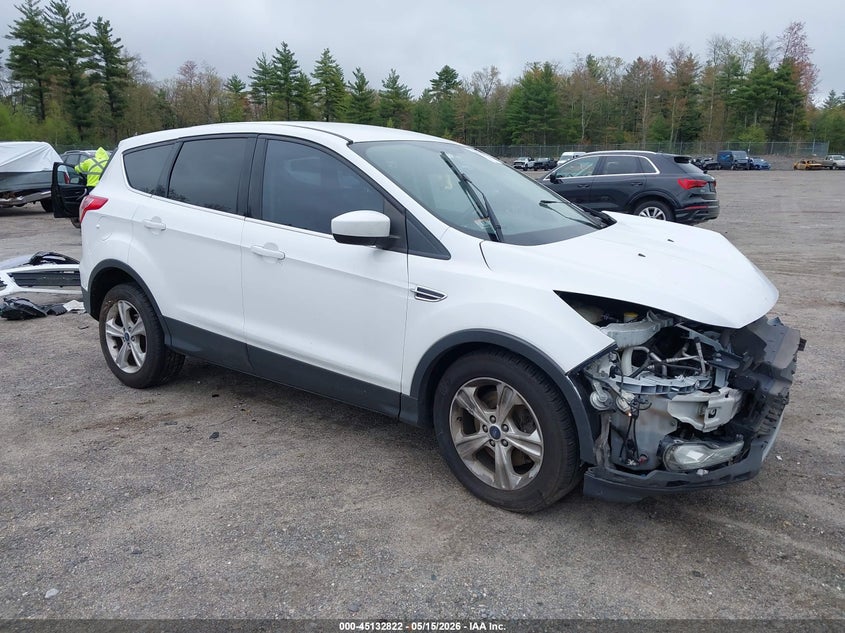
Damage map
If damage records exist for this VIN, the report shows the affected zonesTheft, liens and title
Checks that matter for registration and resaleRecorded condition
What the source noted about the car as it stands- Runs and drives
- No
- Engine starts
- No
- Keys available
- No
- Start code
- Stationary
History timeline
Data decoded from the VIN is shown. Records on file, if any, are in the full report.Mileage
Odometer reading as recorded at the sourceEarlier photos may be in the report
Check before you buy
Four things worth checking on any used carFORD ESCAPE SE specifications
- VIN
- 1FMCU9GX0GUB74772
- Make
- FORD
- Model
- ESCAPE SE
- Year
- 2016
- Colour
- WHITE
- Fuel
- Gasoline
- Engine
- 1.6 L
- Cylinders
- 4
- Power
- 178 hp
- Transmission
- Automatic
- Drive
- 4x4
- Recorded odometer
- 163 635 mi
- Recorded damage
- Front End
What buyers ask about the FORD ESCAPE SE
Was this 2016 FORD ESCAPE SE damaged before?
The damage in the specifications is what the source noted at the time. Earlier accidents and repairs on file for VIN 1FMCU9GX0GUB74772, if any, are in the full report.
Can I trust the odometer reading of 163 635 mi?
It is the figure as recorded, not verified. Compare it with the earlier readings in the full report: they can only go up, so a drop points to a wound-back odometer.
In which countries was this car registered?
Registrations abroad seldom reach local registers. If this car was registered in other countries, the full report names them.
Who sells the report, and what does it cost?
An independent partner, selected automatically for each VIN by our system from analytical data. The partner shows the price before you pay; we may earn a commission.
VIN 1FMCU9GX0GUB74772: history
The Ford Escape SE described here left the factory in 2016. The engine is a 1.6-litre petrol unit with four cylinders. Power reaches the wheels through an automatic gearbox.
At the time of recording, the car had covered 163,635 miles. Because the clock counts miles, any figure noted in kilometres has to be converted before the two can be compared. A car that has covered this much distance for its age has worked hard, and a mechanic should judge the wear accordingly. A single figure proves little: what makes a mileage believable is a series of readings that rise steadily over the years. Older figures usually turn up on service invoices, inspection reports and past title paperwork.
Primary damage in the record: front end. Whether the damage has been repaired since, and how well, is not something a damage entry can show. Damage rarely stays where it is first seen: an impact can reach the mountings and airbags behind a panel, and water or fire the wiring and electronics.
A car that does not run has to be moved on a trailer, and its real condition is known only after a thorough assessment. An engine that will not start could have a simple electrical fault or internal damage, and only diagnostic work can tell which. Without a key, a modern car needs a replacement coded to its immobiliser before it can even be started.
The record shows a non-repairable title. A title of this kind usually means the car was written off as a total loss after damage. The structure and the quality of any work done deserve a thorough inspection on a car with a branded title, however sound the car looks.
A car’s history is the sum of what has happened to it since it was new, and most of it has left a trace on paper somewhere. A car’s paperwork is scattered: the registry knows about owners, the workshop about repairs and the insurance company about claims. Much of a car’s past cannot be seen: a good body repair leaves no obvious mark, and neither do years of hard driving.
When a car does not run, a compression test and the condition of the oil tell a mechanic whether the engine can be brought back to life. On a petrol engine, spark plugs, ignition coils and the cooling system are the routine items a service history should cover. With no test drive possible, the automatic gearbox has to be assessed on a lift and with diagnostic equipment. Drive to all four wheels means more to maintain: differentials and couplings have oil of their own, which some manufacturers want changed at set intervals.
The tenth character of the VIN stands for the model year, and the eleventh for the plant that built the car. The VIN on file for this car is 1FMCU9GX0GUB74772. The number in the car’s documents should match the one stamped into the body and the one on the plate at the base of the windscreen.
A VIN report shows what has been logged: earlier registrations, odometer figures, damage entries, branded titles and theft checks, wherever such data exists. The absence of an entry is not proof that nothing happened; it may only mean that nobody wrote it down. However complete the paperwork, only an inspection shows the condition of the body, suspension, brakes and electrics today. With this 2016 Ford Escape SE, the first step is a look at the history behind VIN 1FMCU9GX0GUB74772.
Similar FORD ESCAPE SE cars
All FORD cars 2017 FORD ESCAPE SE
1FMCU0•••••••0125
1.5 gasoline · Automatic
Check history
2017 FORD ESCAPE SE
1FMCU0•••••••0125
1.5 gasoline · Automatic
Check history
 2014 FORD ESCAPE SE
1FMCU0•••••••1137
2.0 gasoline · Automatic
Check history
2014 FORD ESCAPE SE
1FMCU0•••••••1137
2.0 gasoline · Automatic
Check history
 2018 FORD ESCAPE SE
1FMCU9•••••••7963
1.5 gasoline · Automatic
Check history
2018 FORD ESCAPE SE
1FMCU9•••••••7963
1.5 gasoline · Automatic
Check history
 2019 FORD ESCAPE SE
1FMCU9•••••••6885
1.5 gasoline · Automatic
Check history
2019 FORD ESCAPE SE
1FMCU9•••••••6885
1.5 gasoline · Automatic
Check history