2014 KIA OPTIMA SXL TURBO VIN 5XXGR4A68EG330585

Damage map
If damage records exist for this VIN, the report shows the affected zonesTheft, liens and title
Checks that matter for registration and resaleRecorded condition
What the source noted about the car as it stands- Runs and drives
- No
- Engine starts
- No
- Keys available
- Yes
- Start code
- Stationary
History timeline
Data decoded from the VIN is shown. Records on file, if any, are in the full report.Mileage
Odometer reading as recorded at the sourceEarlier photos may be in the report
Check before you buy
Four things worth checking on any used carKIA OPTIMA SXL TURBO specifications
- VIN
- 5XXGR4A68EG330585
- Make
- KIA
- Model
- OPTIMA SXL TURBO
- Year
- 2014
- Colour
- BLACK
- Fuel
- Gasoline
- Engine
- 2.0 L
- Cylinders
- 4
- Power
- 274 hp
- Transmission
- Automatic
- Drive
- FWD
- Recorded odometer
- 150 717 mi
- Recorded damage
- Front End
What buyers ask about the KIA OPTIMA SXL TURBO
Was this 2014 KIA OPTIMA SXL TURBO damaged before?
The damage in the specifications is what the source noted at the time. Earlier accidents and repairs on file for VIN 5XXGR4A68EG330585, if any, are in the full report.
Can I trust the odometer reading of 150 717 mi?
It is the figure as recorded, not verified. Compare it with the earlier readings in the full report: they can only go up, so a drop points to a wound-back odometer.
In which countries was this car registered?
Registrations abroad seldom reach local registers. If this car was registered in other countries, the full report names them.
Who sells the report, and what does it cost?
An independent partner, selected automatically for each VIN by our system from analytical data. The partner shows the price before you pay; we may earn a commission.
VIN 5XXGR4A68EG330585: history
This KIA Optima SXL Turbo is a 2014 model, finished in black. There is an automatic gearbox, with front-wheel drive. The petrol engine has four cylinders and produces 274 hp.
The clock stood at 150,717 miles when the data was entered. The instruments count in miles; the same distance in kilometres is about 1.6 times the figure. A later figure lower than an earlier one points to a replaced instrument cluster or an odometer that has been wound back. Older figures usually turn up on service invoices, inspection reports and past title paperwork.
In the source data, the main issue is front-end damage. Two cars with the same damage label can be very different: one needs a few new parts, the other major work. Some damage shows its consequences only later: corroded connectors and electrical faults can surface months afterwards.
A car that does not run has to be moved on a trailer, and its real condition is known only after a thorough assessment. An engine that will not start could have a simple electrical fault or internal damage, and only diagnostic work can tell which. A key was present. Condition notes are a snapshot: the car may have been worked on, stripped of parts or left standing since.
Title status in the record: salvage. At some point in its life, the car was declared a total loss. If any work has been done on the car since, photos and invoices should show what was replaced.
A car’s history answers three questions: who kept it, how it was looked after and what went wrong along the way. A clean, polished car can still hide a serious accident, a flood or years of hard use.
For the engine, the service history matters most: oil changes, filters and the timing belt or chain are the entries to look for. On a petrol engine, spark plugs, ignition coils and the cooling system are the routine items a service history should cover. With no test drive possible, the automatic gearbox has to be assessed on a lift and with diagnostic equipment.
The ninth character of the VIN is a check digit calculated from the other sixteen, so a mistyped or invented number does not add up. The VIN on file for this car is 5XXGR4A68EG330585. Scratches, fresh paint or a replaced plate around the VIN markings are warning signs in their own right.
A VIN report shows what has been logged: earlier registrations, odometer figures, damage entries, branded titles and theft checks, wherever such data exists. Paperwork is only as complete as the people who kept it, so a report with few entries lowers the risk without removing it. A history report says nothing about the car’s present condition: the frame, corrosion, electrics and the quality of any repair are judged on a lift by a mechanic. The history behind VIN 5XXGR4A68EG330585 is the natural starting point before any decision about this KIA Optima SXL Turbo.
Similar KIA OPTIMA SXL TURBO cars
All KIA cars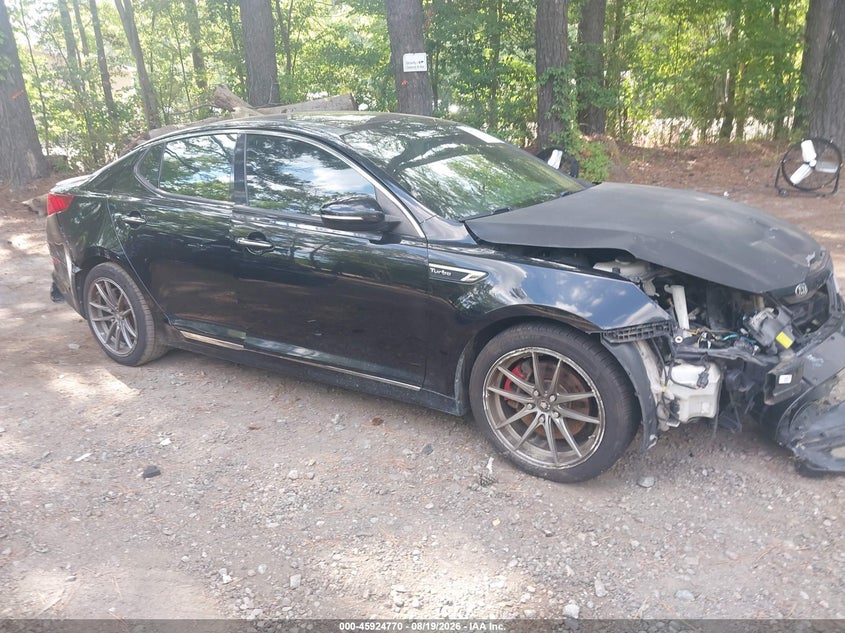 2015 KIA OPTIMA SXL TURBO
5XXGR4•••••••3611
2.0 gasoline · Automatic
Check history
2015 KIA OPTIMA SXL TURBO
5XXGR4•••••••3611
2.0 gasoline · Automatic
Check history
 2014 KIA OPTIMA EX
5XXGN4•••••••0335
2.4 gasoline · Automatic
Check history
2014 KIA OPTIMA EX
5XXGN4•••••••0335
2.4 gasoline · Automatic
Check history
 2023 KIA FORTE LXS
3KPF24•••••••0523
2.0 gasoline · Automatic
Check history
2023 KIA FORTE LXS
3KPF24•••••••0523
2.0 gasoline · Automatic
Check history
 2022 KIA SOUL X-LINE
KNDJ23•••••••0818
2.0 gasoline · Automatic
Check history
2022 KIA SOUL X-LINE
KNDJ23•••••••0818
2.0 gasoline · Automatic
Check history